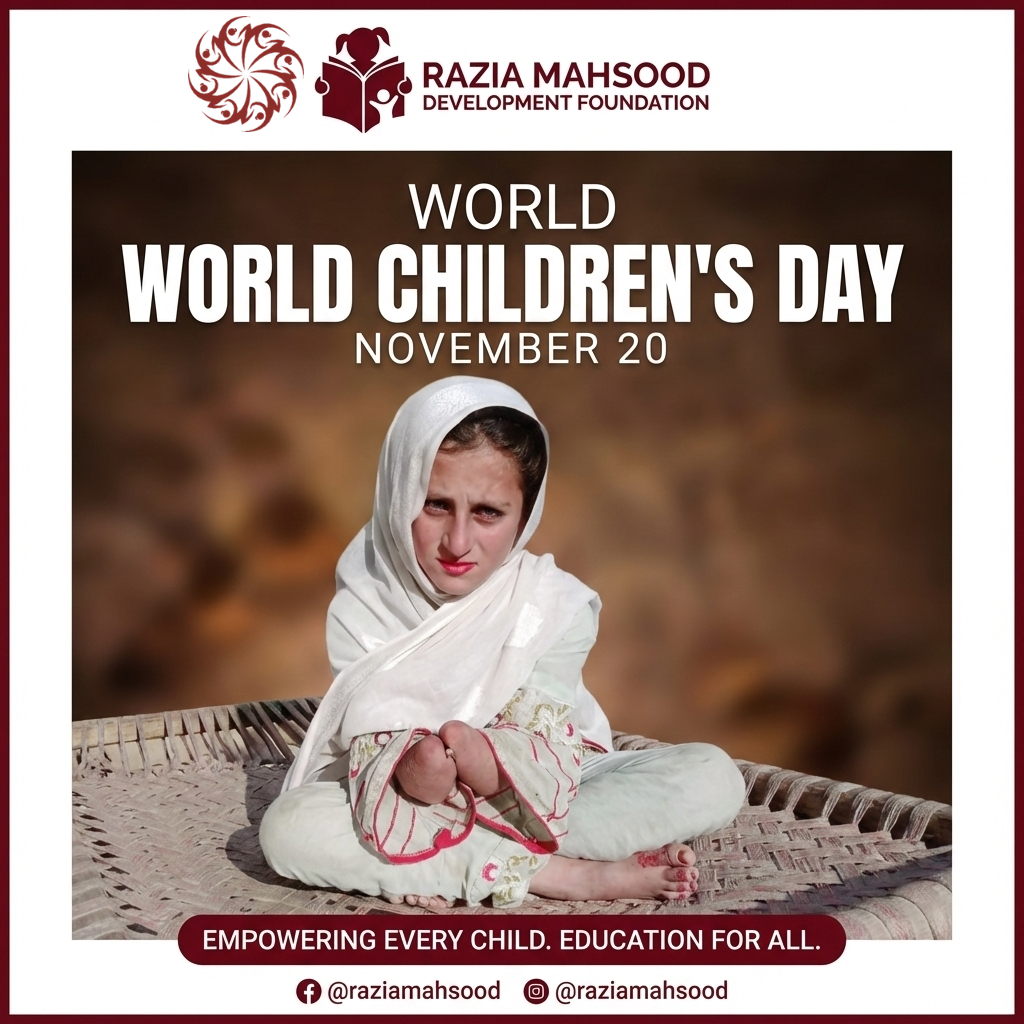

On World Children’s Day, stories like Raheela’s force us to pause and reflect on what childhood truly means in conflict-affected regions. While the world speaks about dreams, schools, and safe playgrounds, thousands of children in Pakistan grow up surrounded by fear, loss, and silence.
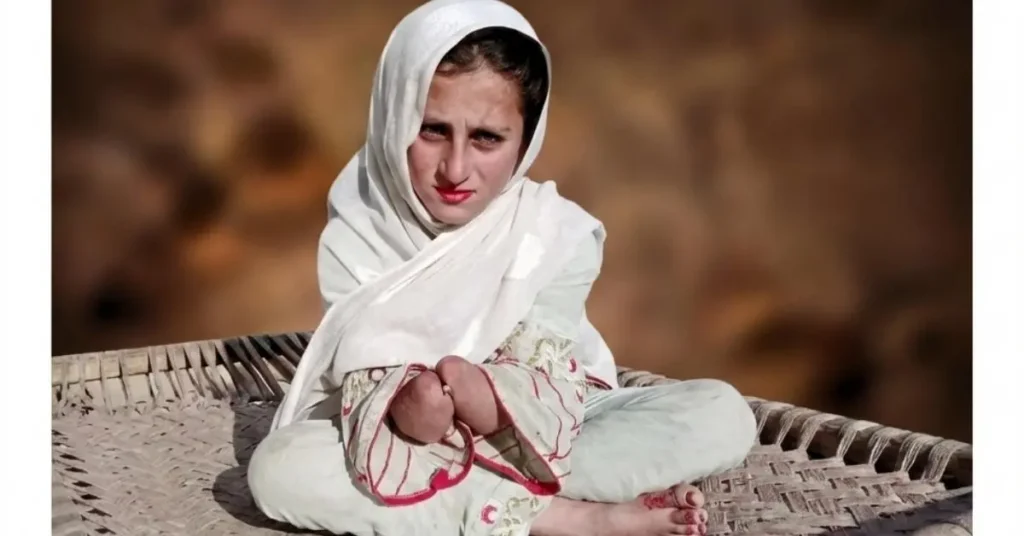
Raheela, a young girl from Lower South Waziristan, is one of them. Her journey is painful, inspiring, and deeply human. It is also the reason the Razia Mahsood Development Foundation RMDF continues to raise its voice for children who are too often forgotten.
A Childhood Altered in Seconds
In August 2020, eleven-year-old Raheela was playing with her siblings near a natural spring, close to an FC fort. What seemed like an ordinary afternoon turned into a life-changing tragedy when they found a thermos-shaped object. Curiosity led Raheela to open it. Within seconds, an explosion tore through their lives.
Raheela lost both of her hands.
Her brother lost vision in one eye.
Her sister suffered severe psychological trauma and eventually left school.
There was no immediate official help, despite the incident happening near a security installation. It was the local community that rushed the children to the hospital, saving their lives. For the family, survival came with a high cost, emotional, physical, and financial.
Pain, Grief, and a Question No Child Should Ask
When Raheela regained consciousness, her first words were not of anger, but confusion and heartbreak.
“Ammi, where are my hands. Give me my hands back.”
That moment captured the cruelty of conflict for children. A question no child should ever have to ask. Her pain was raw and overwhelming, yet what followed showed a strength that continues to inspire everyone who meets her.
Learning to Live Again
Medical professionals explored prosthetic options, but bionic hands were not practical for Raheela’s rural environment. They were heavy, fragile, and unsuitable for daily life in Waziristan. Instead of giving up, Raheela adapted.
Today, she writes using her arm.
She helps her mother in the kitchen.
She irons clothes and stitches fabric using a sewing machine.
She plays cricket with friends.
She continues her education with determination.
Her disability did not end her ambition. Raheela dreams of becoming a doctor so she can help children who suffer as she did. In a place where access to healthcare is limited, her dream carries deep meaning.
A Family Under Constant Pressure
The tragedy did not stop with Raheela’s injuries. Her family continues to face serious health and financial challenges.
Her mother developed kidney disease and has already lost the function of one kidney. She needs surgery costing around Rs. 600,000. Her father now has diabetes. Her brother works daily wage jobs to support the household.
Despite everything, the family refuses to let RRaheela’seducation slip away. Their struggle reflects the reality of many families in conflict zones, where one incident can push an entire household into a long-term crisis.
Why RMDF Is SharinRaheela’sla Story
RMDF is sharing Raheela’s story on World Children’s Day to remind the world that behind the statistics are real children with real dreams. Raheela represents thousands of children living in conflict-affected areas, poverty-stricken regions, and communities where disability is still misunderstood or stigmatized.
Her story highlights urgent needs, including child protection in conflict zones, access to quality education, mental health support for trauma survivors, and inclusive services for children with disabilities. It also shows the gaps that still exist when state support does not reach the most vulnerable.
RMDF works across South Waziristan, North Waziristan, Lakki Marwat, and Dera Ismail Khan to advocate for these rights and support families trying to rebuild their lives with dignity.
A Call to Action on World Children’s Day
On this World Children’s Day, RMDF calls on government institutions, donors, development partners, and civil society to stand together for children like Raheela.
No child should lose their future to conflict.
No child with a disability should be left behind.
Every child deserves safety, dignity, education, and opportunity.
RRaheela’smessage to the world is simple yet powerful.
“” may not have hands, but I hold my dreams with courage. One day, I will make them real.”
Her courage is not just her own. It is a reminder of what is possible when resilience meets support, and why the rights of every child must remain a national and global priority.